
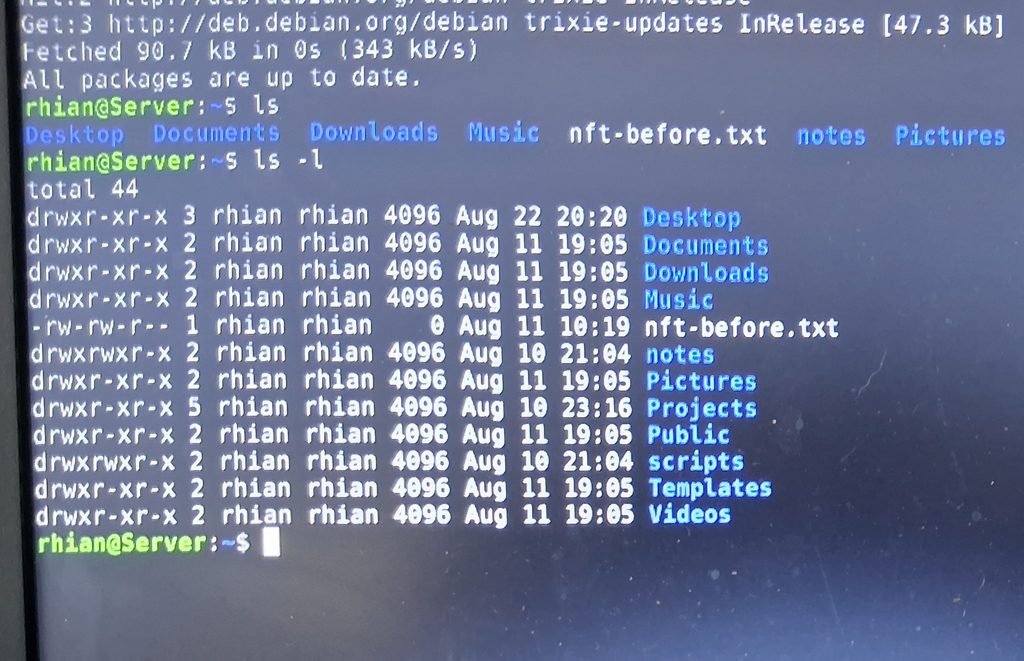
Linux is an open-source operating system that is widely used on computers, servers, phones, embedded devices and many other types of hardware.
Technically, Linux itself is the kernel- the core part of an operating system that manages the computers hardware and allows software to communicate with it.
Unlike Windows or macOS, Linux is generally developed as open-source software, meaning its source code can be inspected, modified and distributed by others.
What Does Linux Do
The Linux kernel manages important parts of a computer, including:
- CPU- manages processes and allows programs to use the processor.
- Memory- manages RAM and determines how it is allocated.
- Storage- allows the operating system and applications to access files and drives.
- Hardware- communicates with devices such as keyboards, displays, network adapters and USB devices.
- Processes- manages the programs and services running on the computer.
- Networking- provides the functionality needed for network communication.
However, the kernel alone isn’t a complete operating system. This is where Linux distributions, or distros, come in.
What Are Linux Distros
A Linux distro(distribution) is a complete operating system built around the Linux kernel.
A distro usually combines:
- The Linux kernel
- System utilities
- A package manager
- Software repositories
- Configuration tools
- Optional desktop environments
- Applications
Different distros make different choices about how the system is organised and what software is included.
Common Linux Distros
Debian
A stable and widely used distribution known for its reliability. It is commonly used for servers as well as desktop computers, it is actually what I am using now to write this page!
Ubuntu
Based on Debian and designed to be relatively easy to use. It is popular with beginners and is also widely used on servers.
Linux Mint
Based on Ubuntu and focused on providing a familiar desktop experience for people moving from Windows.
Fedora
A modern distribution sponsored by Red Hat. It tends to adopt newer technologies relatively quickly.
Arch Linux
A minimal distribution that gives the user considerable control over how the system is built and configured.
There are many other distributions out there, each designed with different priorities in mind.
Why So Many Distros?
Because Linux is open-source, different organisations and communities can and do build their own operating systems around it.
One distro might prioritise stability, another ease of use, another security and another having the latest software.
This means Linux can be adapted to many different purposes rather than being one fixed operating system.
Linux And The Command Line
Linux can be operated using a graphical desktop environment, similar to Windows, but the command line is also an important part of Linux.
A terminal allows you to interact with the system by entering commands such as:
- ls
- cd
- mkdir
- cp
- sudo
- apt
We will look more at these commands later on but for now it will suffice to know they exist. The command line is particularly important when managing Linux servers, which often run with no graphical desktop at all.
Where Is Linux Used?
Linux is used in many different places, including:
- Personal computers
- Web servers
- Cloud computing
- Network equipment
- Supercomputers
- Embedded systems
- Development environments
- Android devices
One of Linux’s major strengths is its flexibility. The same basic kernel can be used as part of a lightweight system on an old computer or as part of a powerful server infrastructure.